



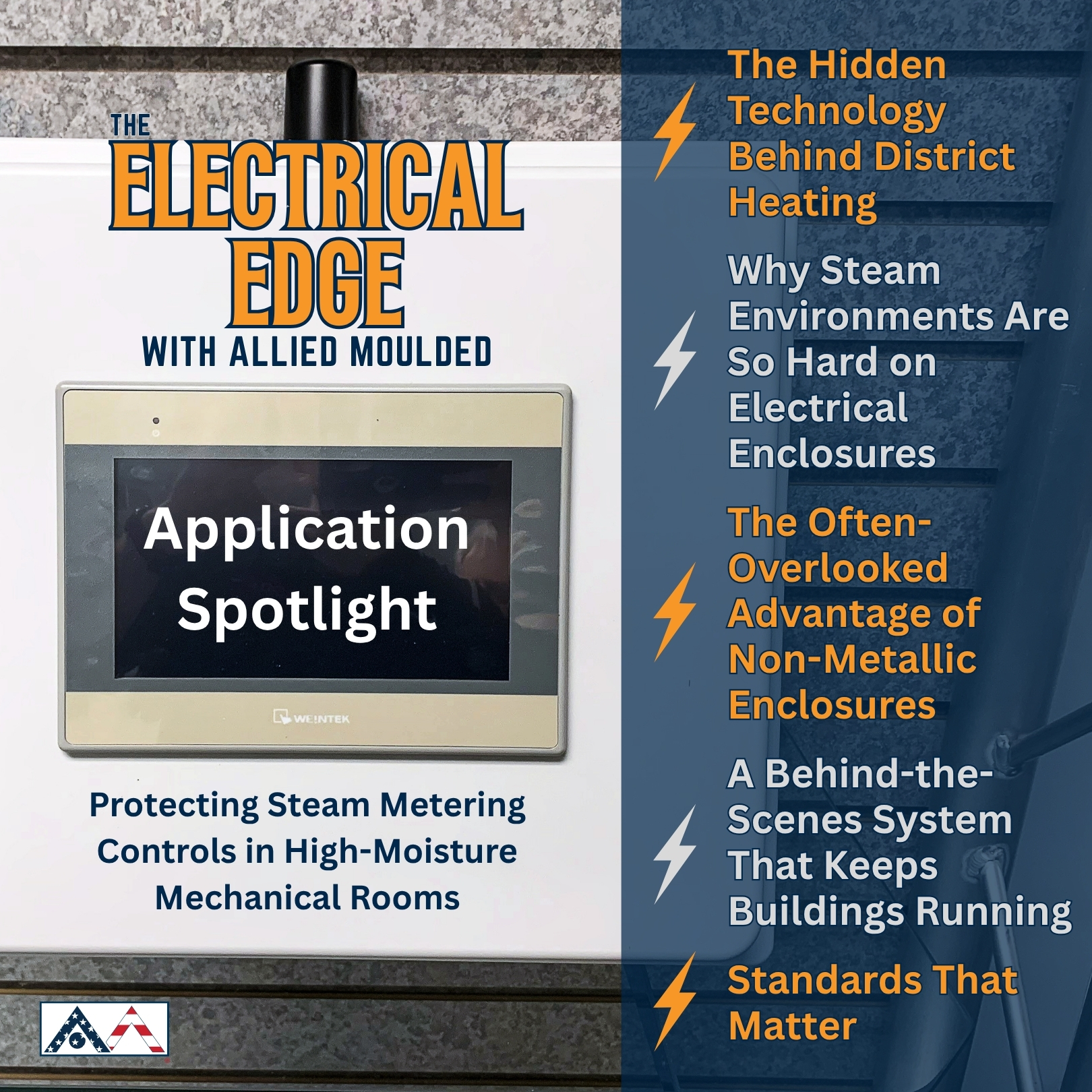
In district heating systems, steam creates one of the harshest environments for electrical controls. Inside steam rooms and mechanical spaces, constant moisture, condensation, and temperature fluctuations can quickly degrade metal enclosures and compromise sensitive instrumentation.
For one industrial instrumentation integrator, the challenge was in ensuring reliable data transmission while maintaining NEMA 4X environmental protection.
The Hidden Technology Behind District Heating
Most building occupants never think about where their heat comes from. Yet behind the scenes, district heating systems rely on sophisticated monitoring and control infrastructure.
Instrumentation packages installed on steam lines measure consumption using vortex meters and communicate that data back to centralized control systems. These systems also automate valves that regulate steam flow throughout the network.
In practice, that means enclosures installed in mechanical rooms or steam environments must protect:
- Data aggregation equipment collecting metering information
- Control systems that operate motorized steam valves
- Communication hardware transmitting operational data
The challenge, pure and simple: Steam rooms are brutal on enclosures.
Why Steam Environments Are So Hard on Electrical Enclosures
Steam rooms combine multiple environmental stressors that can quickly degrade conventional enclosures:
- Persistent moisture and condensation
- Corrosive conditions for metal surfaces
- Temperature cycling
- Long-term gasket degradation risks
Under NEMA Type 4X requirements, enclosures must protect against hose-directed water, corrosion, and environmental contaminants.
But in steam environments, corrosion becomes the real long-term threat.
A painted steel enclosure may initially meet environmental ratings, but over time rust can compromise both the enclosure body and sealing surfaces. Once corrosion damages a door flange or gasket interface, the NEMA seal can fail, allowing moisture intrusion that threatens the electronics inside.
For instrumentation systems designed to operate continuously, that’s a serious reliability risk.
Standards That Matter
For instrumentation installed in steam environments, enclosure performance is typically evaluated against:
- NEMA Type 4X – protection against corrosion, water ingress, and hose-directed water
- UL enclosure standards for electrical equipment protection
- Proper maintenance of gasket integrity to maintain environmental sealing
As always, final compliance determinations rest with the Authority Having Jurisdiction (AHJ) and project specifications.
The Solution: Fiberglass Protection Built for Harsh Environments
To address the demands of steam metering installations, the integrator standardized on fiberglass AM Series enclosures, from Allied Moulded, designed for NEMA 4X performance.
In this application, one enclosure houses data acquisition equipment collecting steam consumption metrics and a second enclosure manages valve controls that regulate steam flow through the system.
The fiberglass construction provides several advantages in this environment:
- Corrosion resistance in constant moisture
- Long-term environmental sealing without rust degradation
- Wireless signal transparency for communication hardware
- Reduced lifecycle risk compared with metal alternatives
The fiberglass enclosure can deliver exceptionally long service life.
In fact, in many cases the electronics inside will reach end-of-life long before the enclosure itself shows signs of degradation.
The Often-Overlooked Advantage of Non-Metallic Enclosures
For this application, the AM1426RT enclosure offered a critical advantage beyond corrosion resistance.
The instrumentation inside the enclosure communicates operational data wirelessly to building control systems. When enclosures are metallic—particularly stainless steel—radio signals often struggle to pass through the housing.
That creates an additional engineering challenge.
With metal enclosures, designers may need to install external antennas, drill additional penetrations in the enclosure, and add specialized cable routing or connectors.
Each modification introduces cost, complexity, and additional sealing concerns.
A fiberglass enclosure solves this problem by allowing wireless signals to pass through the enclosure walls without interference.
This enables engineers to keep antennas safely inside the enclosure—maintaining environmental protection while simplifying system design.
A Behind-the-Scenes System That Keeps Buildings Running
District heating infrastructure rarely gets attention, yet it quietly powers comfort across campuses, cities, and large facilities.
Instrumentation systems like these provide the data needed to monitor steam usage, improve system efficiency, automate flow control, and maintain safe and reliable operations.
Enclosure selection plays a critical role in protecting those systems—especially in harsh mechanical environments.
Rule of Thumb for Steam Applications
When specifying enclosures for high-moisture environments:
✔ Consider fiberglass for corrosion resistance
✔ Verify NEMA 4X environmental protection
✔ Evaluate wireless communication needs inside the enclosure
✔ Minimize penetrations that could compromise sealing
Solutions like Allied Moulded’s AM Series fiberglass enclosures are designed to address exactly these types of industrial instrumentation challenges.
