



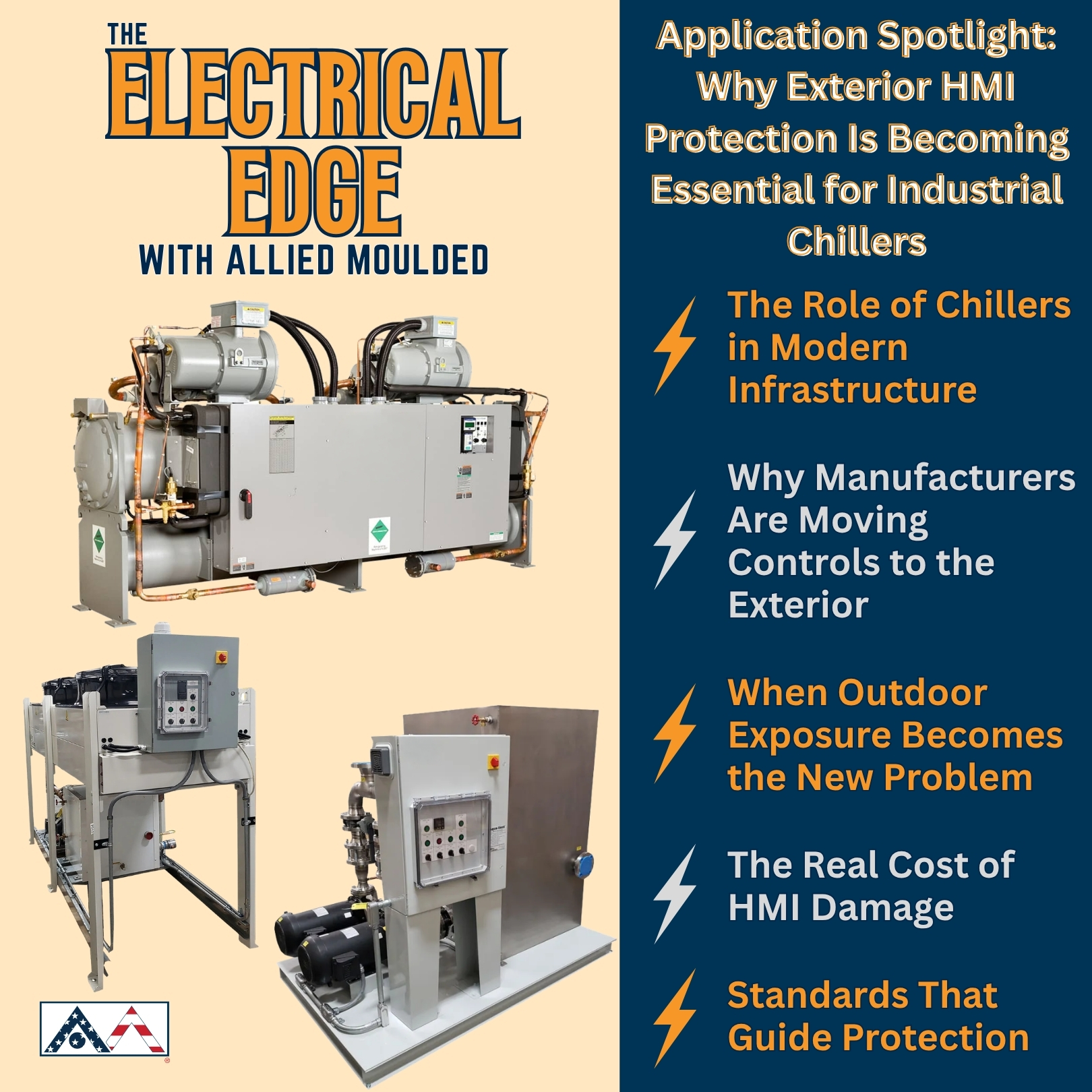
As building systems become smarter, control interfaces are moving closer to technicians, and sometimes outside the equipment itself. For large industrial chillers serving hospitals, factories, and data centers, relocating the human-machine interface (HMI) to the exterior improves serviceability. But it also exposes expensive electronics to weather, UV radiation, and accidental damage.
The solution lies in protecting those interfaces with durable NEMA 4X-rated HMI covers.
The Role of Chillers in Modern Infrastructure
Large industrial chillers are the backbone of cooling systems for critical
facilities, including:
- Data centers
- Hospitals
- Universities
- Manufacturing plants
- Commercial buildings
These systems circulate chilled water throughout a facility, enabling precise temperature control for everything from occupant comfort to mission-critical equipment.
To operate efficiently, chillers rely on advanced digital control systems managed through HMIs: touchscreen interfaces used by technicians for diagnostics, configuration, and monitoring.
Historically, these controls were mounted inside the equipment enclosure.
Why Manufacturers Are Moving Controls to the Exterior
In older designs, accessing the HMI required opening the chiller enclosure and reaching into the system.
This created several service challenges, such as slower diagnostics during maintenance, increased exposure of internal components during service, and reduced convenience for technicians performing quick checks.
To improve serviceability, some manufacturers began relocating the interface so it passes through the enclosure door, allowing technicians to access the touchscreen directly from the outside.
The improvement is simple, but it creates new risks.
When Outdoor Exposure Becomes the New Problem
Industrial chillers are often installed on rooftops, on exterior equipment pads, or adjacent to large facilities.
That means exterior HMIs must withstand UV exposure from direct sunlight, rain and environmental moisture, dust and airborne contaminants, and impact or accidental damage from nearby work.
There’s also a human factor.
A blinking screen on a rooftop unit can attract curiosity from personnel who shouldn’t be interacting with system controls.
For equipment manufacturers, protecting these interfaces becomes critical.
The Real Cost of HMI Damage
Industrial HMIs are not inexpensive components.
Touchscreen control panels can cost thousands of dollars, and failure can impact both equipment operation and serviceability.
That makes protective solutions surprisingly cost-effective.
In many installations, the cost of an HMI cover represents a small fraction of the value of the interface it protects, acting almost like an insurance policy for critical controls.
Standards That Guide Protection
Exterior controls on industrial equipment must typically maintain:
- NEMA Type 4X protection against moisture and environmental exposure
- Adequate impact resistance to protect internal electronics
As always, final equipment compliance must be verified with project specifications and the Authority Having Jurisdiction (AHJ).
The Solution: Clear HMI Covers Designed for Outdoor Equipment
To address these challenges, equipment manufacturers began incorporating protective covers designed specifically for exterior control interfaces.
Clear polycarbonate HMI covers provide several key advantages:
- Environmental sealing for outdoor exposure
- Impact resistance to protect delicate screens
- Visibility of the interface without opening the cover
- Controlled access to prevent unauthorized adjustments
Because the cover is transparent, technicians can monitor system status without exposing the interface to weather.
In practice, these covers often become a standard feature across multiple equipment models once manufacturers see their field performance.
A Growing Role in Data Center Infrastructure
One of the fastest-growing applications for large chillers is data center cooling.
As AI workloads and cloud computing expand, data centers require enormous cooling capacity to maintain stable server temperatures.
While most electrical infrastructure inside these facilities uses NEMA 1 or NEMA 12 enclosures, rooftop chiller systems operate in a completely different environment, one exposed to weather and environmental conditions.
That’s where rugged solutions like Allied Moulded’s polycarbonate HMI covers provide value.
By protecting exterior controls, they help ensure reliable operation for cooling systems supporting mission-critical digital infrastructure.
A Simple Upgrade That Prevents Expensive Failures
Sometimes the most effective protection solutions are also the simplest.
Adding a durable cover over an exterior HMI can extend the life of the interface, reduce accidental damage, maintain environmental protection, and improve technician accessibility.
For equipment manufacturers and facility operators alike, it’s a small design decision that can deliver long-term reliability.
Rule of Thumb for Exterior HMIs
When specifying controls for outdoor equipment:
✔ Protect interfaces from UV exposure
✔ Maintain NEMA 4X environmental protection
✔ Prevent unauthorized access or accidental damage
✔ Consider lifecycle cost, not just upfront hardware price
Protective solutions like Allied Moulded’s HMI Covers are designed to address these challenges while maintaining visibility and usability for technicians.
